

Southeast Asian flavors have been taking North America by storm for some time, but there might not be one bringing more thunder than Filipino right now. Let’s get into some of the what and the why, along with tips for bringing these flavors to your menu from Chef Roy Villacrusis.
Two quick data points:
1) The NRA’s 2025 What’s Hot Culinary tabbed Southeast Asian cuisine as it’s No 1 food trend.
2) Filipino cuisine is the fastest growing Asian cuisine segment according to Datassential, showing some serious momentum.
Some of the best evidence is that Filipino cuisine is now showing up – and showing off – in influential James Beard-nominated tasting menus, steakhouses and earning Michelin stars. We’re talking about Kasama and Boonies in Chicago, Archipelago and Musang in Seattle, Abacá and Naides in San Francisco, and probably more in your city!
All this together has made a space for Filipino food beyond the pancit, adobo and lumpia gateways, and mainstreamed into all manner of restaurants. We asked Chef Roy Villacrusis, a Filipino chef and Aussie Beef Mate, for his take:
AMM: What distinguishes Filipino cuisine, and why is it catching on today?
Roy Villacrusis: I think among SE Asian cuisines, Filipino is the most balanced. We have this interesting mix of Chinese, Spanish, Japanese and Malay in our food culture, and you’ll always find sweet, sour, umami working together. Americans’ familiarity now with misos, umami, vinegar and even fish sauce makes Filipino food much more approachable than it was even 10 years ago.
AMM: Where should chefs start to get into the food?
To really get to know the food, experiment with some of the ingredients – calamansi, ube, Filipino fish sauce, coconut vinegar, and unrefined sugars we use. They’re similar to products you already use, but there’s a nuanced difference.
AMM: What makes Aussie meats a good match for Filipino flavors?
RV: Because Aussie meats are pasture raised, they bring the right level of flavor to the party for the multiple layers of flavor that Filipino food entails. It takes on the acid from vinegar and calamansi, the earthy funk of fish sauce, the umami from soy, so well. One of the first dishes I did with Aussie lamb chops was an adobo treatment, and it’s still in heavy rotation! I’ve done kaldareta – a slow cooked sort of stew – with both goat meat and lamb shank, and it’s incredible.
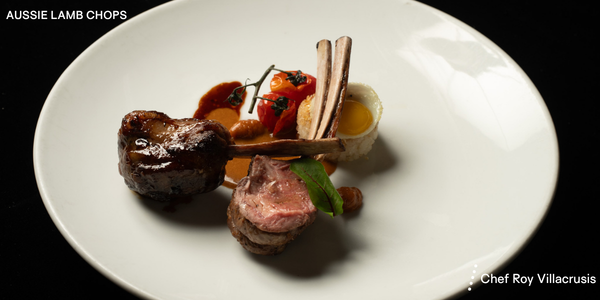
For a few of our favorite Filipino dishes, follow these links. For more inspo from Chef Roy, check out this recap of a recent tasting menu event in San Diego. The menu has to be seen to be believed!